
Standing seam
Raised seams join panels, with attachment designed for the specific system. Clip and seam details can accommodate thermal movement; penetrations and terminations still need careful flashing.
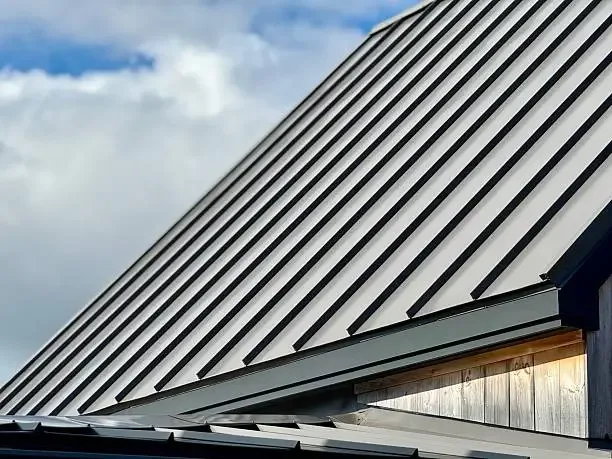
Panel systems use different attachment and weathering details.
Raised seams join panels, with attachment designed for the specific system. Clip and seam details can accommodate thermal movement; penetrations and terminations still need careful flashing.
Fasteners pass through the visible panel. Washer condition, fastening position and the product’s movement requirements matter over time. More sealant is not a substitute for a failed or incorrectly installed fastener detail.
A material change affects more than the finish. Panel length and layout, deck or substrate preparation, underlayment, edge metal and wall connections all belong in the scope.
Roof slope and shape determine suitable profiles and details. Valleys, dormers and chimneys create transitions that must be planned for the selected panel system. Existing covering should not conceal a weak fastening base or unresolved water damage.
Request a free roof inspection
The source of the problem and the system determine the work.
Fasteners, panel laps, penetrations and end conditions need system-specific inspection. A compatible repair must allow the roof to move as designed.
Coating wear, corrosion and mechanical damage have different repair paths. The extent of deterioration and substrate condition determine whether local work is practical.
Panel system, roof area, slope, complex transitions, removal and access affect cost. Architectural-asphalt calculator rates do not apply to metal roofing.
Tell us whether you have an existing metal roof or are considering a material change. Call (816) 837-4667 or request a free inspection.
Call (816) 837-4667