
Seams and punctures
TPO repairs use suitable welded connections; EPDM requires compatible seam and flashing products. Dirt, age and surface condition can affect how much preparation or replacement area is needed.
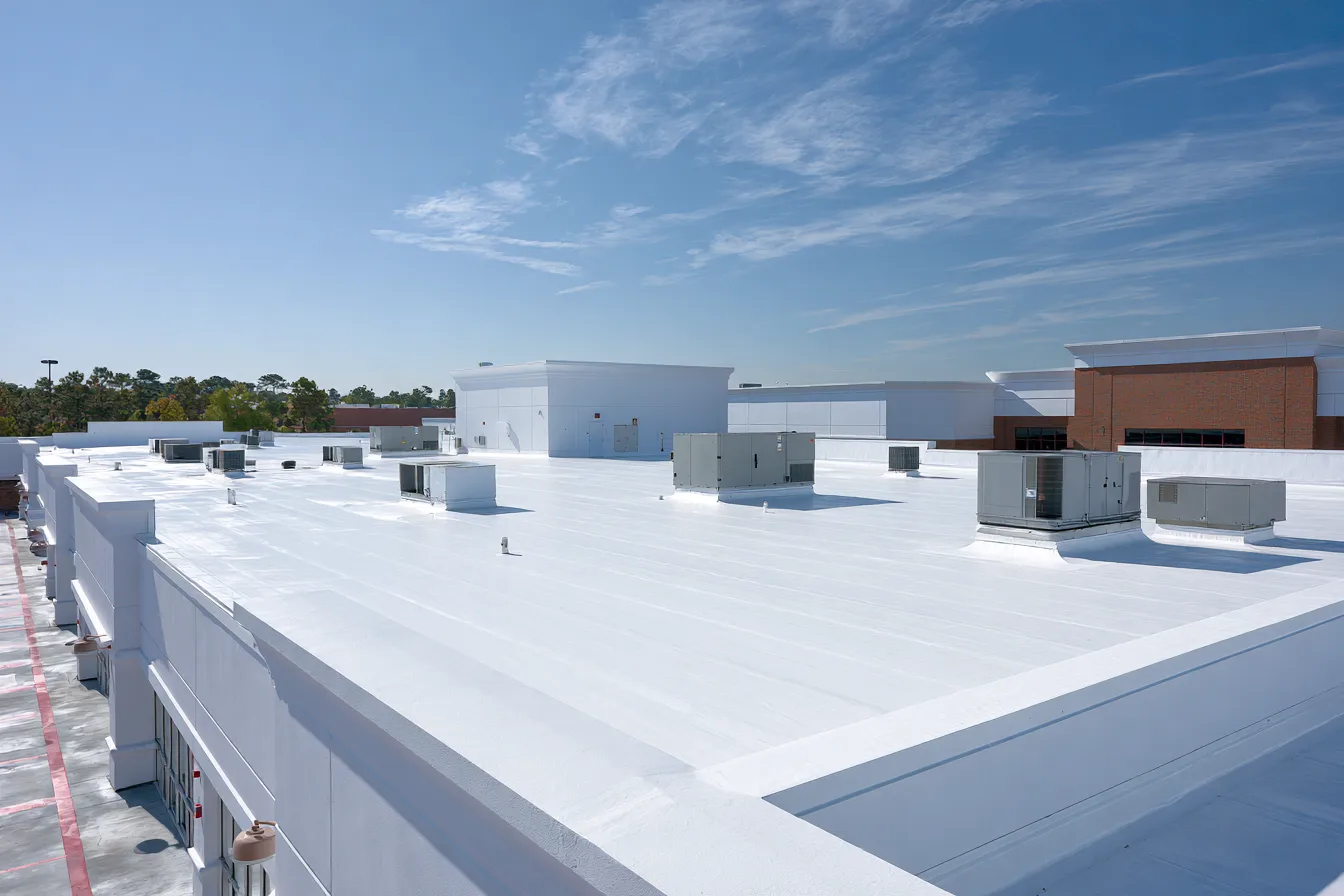
A broad low-slope roof can carry water away from an opening before it appears inside. Seams, curbs, drains and edges interrupt the waterproof surface and need to be assessed in relation to the indoor leak.
The inspection also considers mechanical equipment and nearby wall details so a roof patch does not conceal a different building leak. A repair must end on sound, compatible surface and address any moisture-affected layers included in the work.
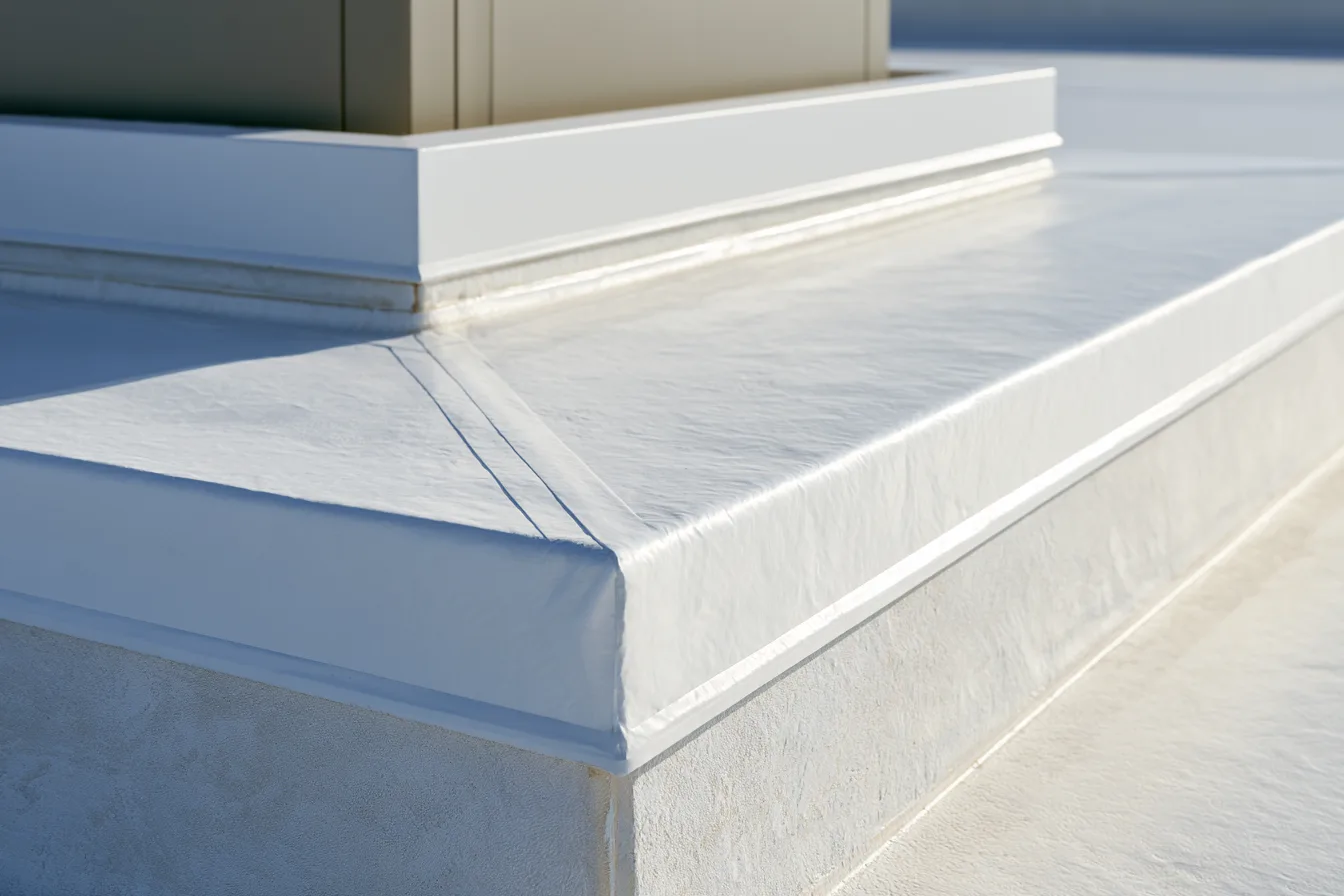
System identification comes before repair product selection.
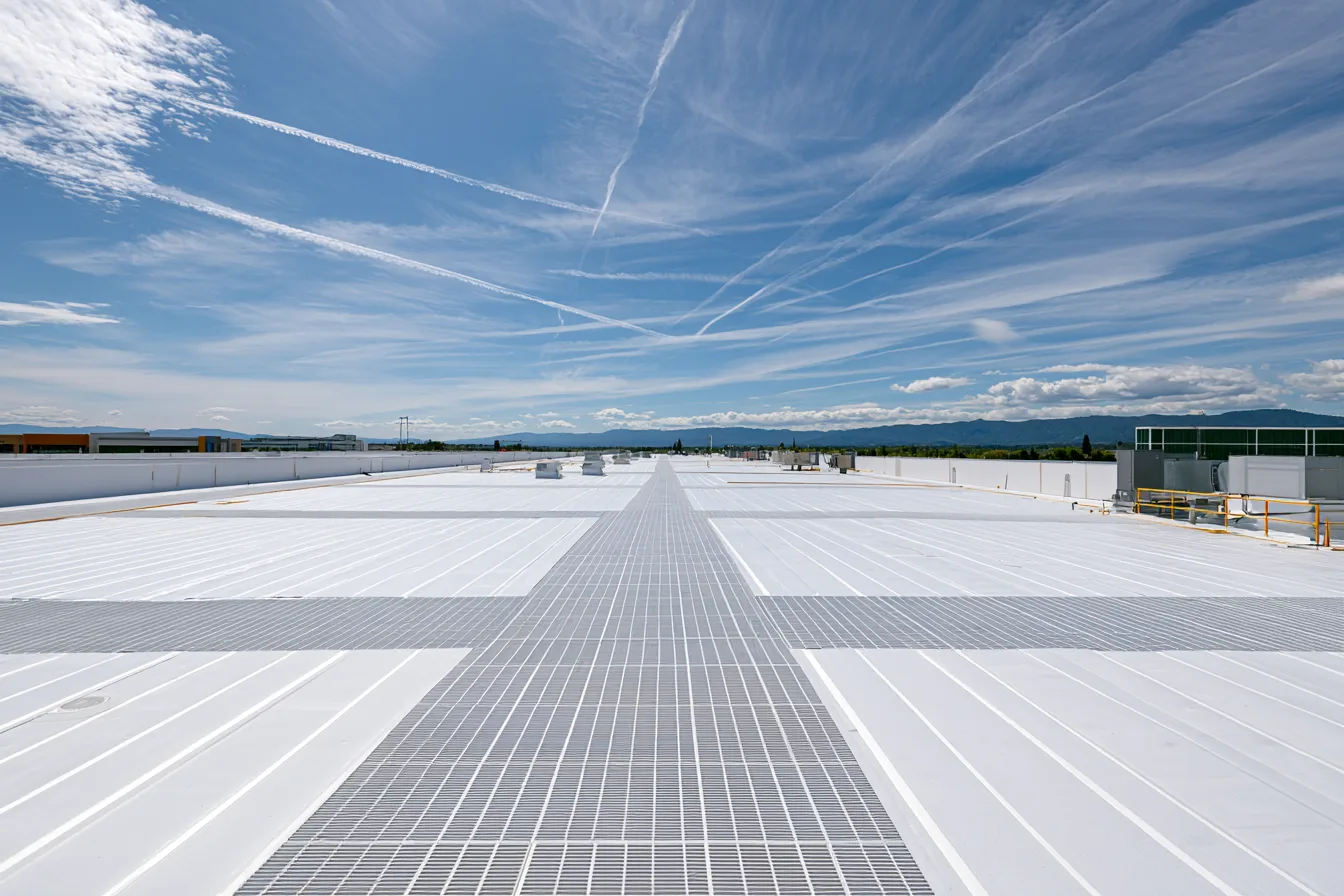
TPO repairs use suitable welded connections; EPDM requires compatible seam and flashing products. Dirt, age and surface condition can affect how much preparation or replacement area is needed.
Corners and vertical transitions need a continuous connection to the field membrane. Movement, poor termination or a deteriorated curb detail may require reconstruction rather than a surface patch.
Blocked drainage and low areas can keep water at a vulnerable detail. Moisture below the membrane can enlarge the repair beyond its visible opening and affect restoration choices.
An isolated opening and a failing roof assembly require different responses.
Sound membrane around a defined opening, secure attachment and localized moisture can support a repair. Its boundary should include the affected material needed to complete the connection.
Widespread wet insulation, deteriorated membrane or unstable attachment can make repeated patches poor maintenance. Coating is only considered after suitability, moisture and drainage are resolved.
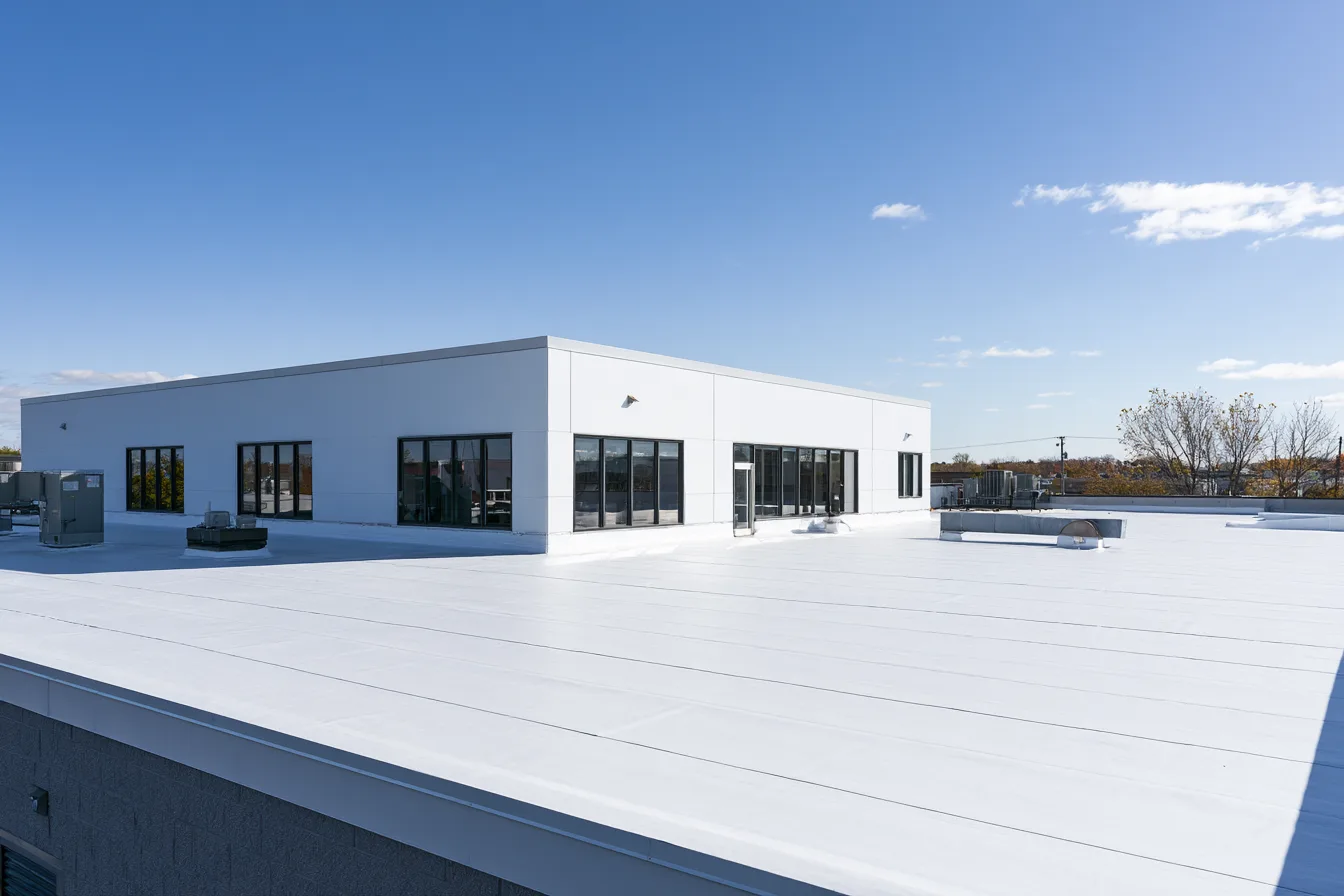
Include the building’s use, where water is appearing and any rooftop equipment near the concern. Call (816) 837-4667 or request a free inspection.
Call (816) 837-4667