Standing water on a commercial roof is a reason to look at drainage and the assembly beneath the surface. A new coating is not automatically the right correction.
A low-slope roof is designed around its drainage points. Debris at an outlet, a blocked strainer or a low area can hold water where a detail receives more exposure than intended. The inspection needs to connect the water location to the roof’s drainage design.
Equipment changes and roof alterations can affect that path. The answer may involve an outlet, a local condition or a wider roof layout rather than the visible surface alone.
The Surface Does Not Show Every Wet Layer
A membrane opening can let water reach insulation beneath the roof. That moisture may spread beyond the visible defect, affecting both the repair area and the suitability of restoration.
A surface repair can be appropriate for an isolated opening with sound surrounding material. Widespread wet insulation needs a different scope because a new surface cannot restore insulation already affected beneath it.
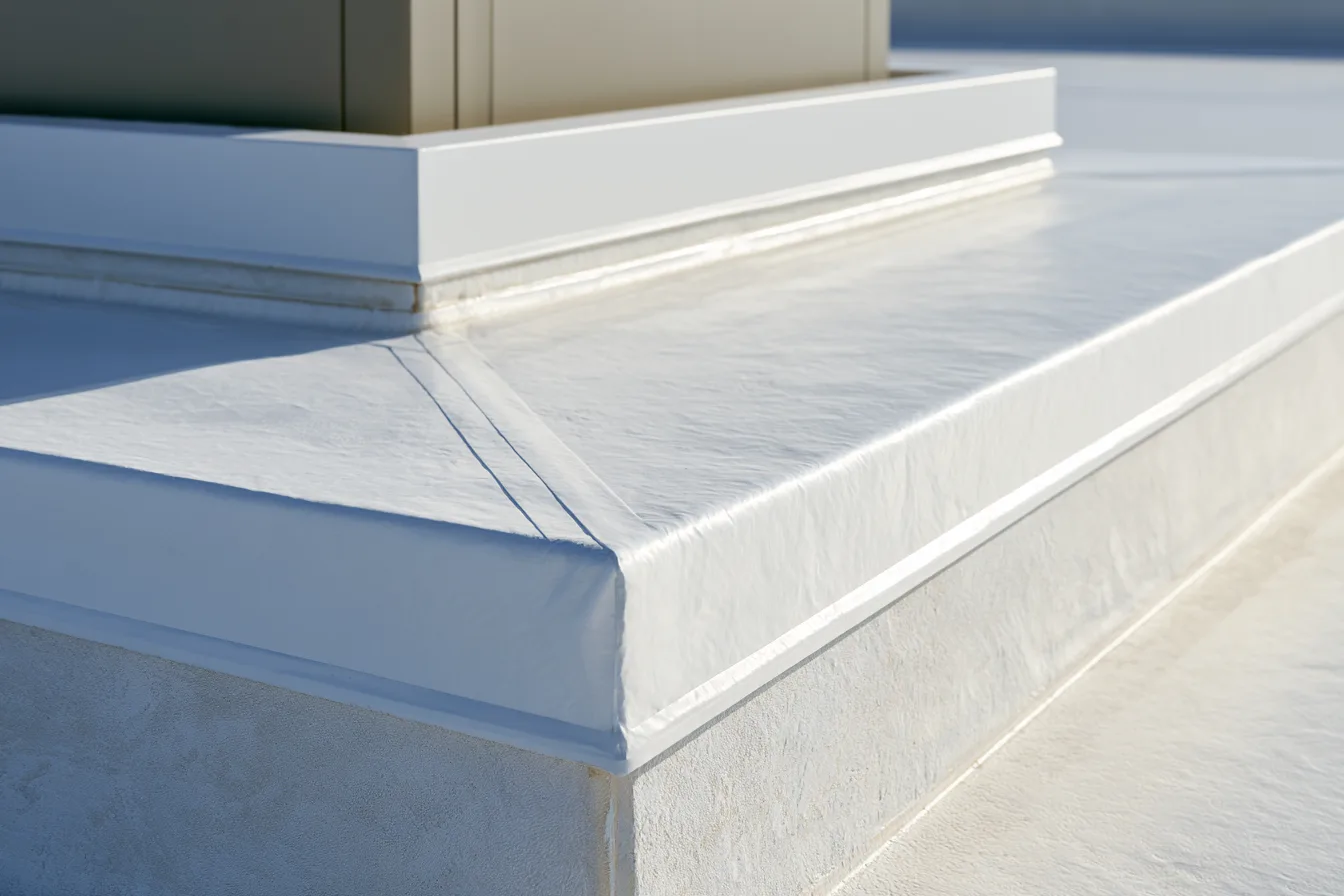
Illustrative roof detail. The actual roof condition determines the repair.
Coating Depends on Roof Suitability
A coating requires a compatible, properly prepared and securely attached substrate. Drainage, adhesion and moisture conditions belong in that suitability decision. Applying coating over a roof problem can leave the underlying cause in place.
Product requirements differ. A general statement that a roof is flat or that water stands after rain is not enough to select a coating system. The actual roof condition must be established.
Plan Around the Building
Access, rooftop equipment, occupied areas and material staging affect the commercial roof plan. Repair records help distinguish a recurring condition from a new isolated problem.
Pleasant Hill Roof Pros can help you start with a free commercial roof inspection. Call (816) 837-4667 or request help through the contact page, including where water is appearing and how the building is used.